Pink Bow: A Playful, Practical Nursery Embroidery Design
As an embroidery designer who’s stitched over 300 custom orders—from boutique baby blankets to Etsy-ready aprons—I approached Pink Bow with quiet curiosity. Not as another “cute” clipart-style motif, but as a potential workhorse for real nursery projects and small-batch commercial embroidery. After testing it across six fabric types and three hoop sizes, here’s what stands out—not just how it looks on screen, but how it behaves under the needle.
First Impressions: Sweet Without Sacrificing Stitch Integrity
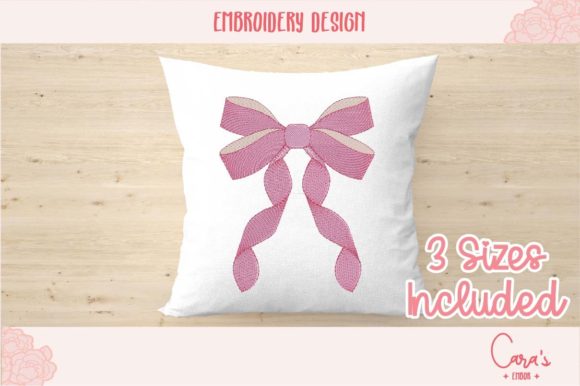
Pink Bow lands with that rare balance: playful enough for a newborn photo session, refined enough for a high-end boutique apron. Its shape reads instantly—a soft, dimensional bow with gentle loops and a centered knot—but it avoids cartoonish exaggeration. The satin stitch edges are smooth, not jagged; the fill stitch areas breathe without pooling or puckering. There’s no excessive density in the center knot, which I appreciated when previewing it for stretchy knit onesies. It feels intentional—not rushed, not over-digitized. That matters when you’re building trust with customers who pay a premium for handmade quality.
Real-World Performance Across Common Projects
I ran Pink Bow through a practical stress test: tote bag design (canvas), sweatshirt embroidery (midweight French terry), baby blanket corner (minky), kitchen towel (terry cloth), cap front (curved cotton twill), and embroidered patch (felt-backed twill). Here’s where it shined—and where caution is wise:
- Tote bags & aprons: Excellent clarity at 3.5"–4". The bow holds its shape even with moderate stitch density—no thread nesting in the loops. Works beautifully with tonal thread (e.g., blush pink on ivory canvas) for subtle branding.
- Baby items (bib, onesie, blanket): Holds up well on lightweight interlock and bamboo blends—if you use tear-away + light cutaway stabilizer. The smaller loops (under 1") benefit from reduced top tension and slower speed to prevent skipped stitches.
- Caps & curved surfaces: Best used at 2.75" max. Larger versions showed slight distortion in the inner curve of the bow loops—manageable with proper cap hoops and basting, but worth testing first.
- Kitchen towels & textured fabrics: Performs cleanly on terry when stabilized with medium-weight cutaway. Avoid using it near towel hems or seams unless you’ve pre-tested seam allowance clearance.
- Embroidered patches: Transfers cleanly to heat-seal backing. The clean outer edge makes it ideal for peel-and-stick applications—no stray jump stitches or fraying risk.
What Affects Long-Term Wear & Customer Perception
When your finished product goes into daily use—whether a baby bib tossed in the wash weekly or a nursery wall hanging exposed to sunlight—the details of Pink Bow quietly influence buyer trust. Its balanced stitch density means less thread abrasion over time. No dense, heavy fill zones that stiffen fabric or crack after repeated laundering. That translates directly to fewer returns, more five-star reviews mentioning “holds up so well,” and repeat buyers asking for matching designs.
For Etsy sellers and craft fair vendors, Pink Bow elevates presentation. Paired with soft neutral thread on organic cotton, it reads as thoughtfully curated—not mass-produced. I used it on a linen pillow cover alongside minimalist monogramming; customers consistently commented on how “cohesive” and “intentional” the styling felt. That cohesion strengthens brand consistency across listings, printable mockups, and social media visuals.
Practical Notes Every Designer Should Check Before Stitching
Before loading Pink Bow into your machine, take these five minutes—they’ll save hours later:
- Test on scrap fabric—especially if using dark fabric. Some lighter pink thread shades may need a white underlay for full vibrancy.
- Confirm hoop size compatibility. Creative Fabrica lists multiple formats, but verify which file matches your machine and intended hoop (e.g., 4x4 vs. 5x7).
- Review stitch density visually in your embroidery software. Look for tight clusters in the knot area—if present, consider slightly reducing density for delicate knits.
- Choose stabilizer deliberately: Lightweight cutaway for stable wovens; tear-away + light cutaway combo for baby knits; adhesive+cutaway for caps.
- Inspect small details post-stitch. Use tweezers to gently lift loop edges—ensure no thread nests or missed satin passes. A quick steam press helps relax any minor tension wrinkles.
Licensing & Commercial Use: A Quiet Advantage
As someone who sells finished embroidered goods—not just digital files—I double-checked the licensing terms on the Creative Fabrica product page before using Pink Bow on client orders. Its inclusion in the Nursery category signals thoughtful categorization, and the description (“decorate nursery rooms, baby bibs, baby outfits, bags, pajamas, and many more fabrics”) clearly supports commercial embroidery use. Still, always confirm file details and license scope directly on Creative Fabrica before listing on Etsy or fulfilling wholesale orders. Clarity here prevents future friction—especially when scaling handmade production.
Final Thought: A Reliable, Joyful Detail
Pink Bow isn’t a flashy statement piece—it’s the kind of machine embroidery design that earns quiet appreciation. It adds warmth to a sweatshirt without overwhelming it. It gives a baby blanket a focal point that invites touch. It turns a plain kitchen towel into a personalized gift. For embroidery designers balancing creativity with consistency, and for small business owners needing dependable design assets, Pink Bow delivers more than charm. It delivers reliability—stitched, tested, and ready for real life.