Unicorn Line Drawing Review
A Delicate, Playful Silhouette That Stitches Cleanly
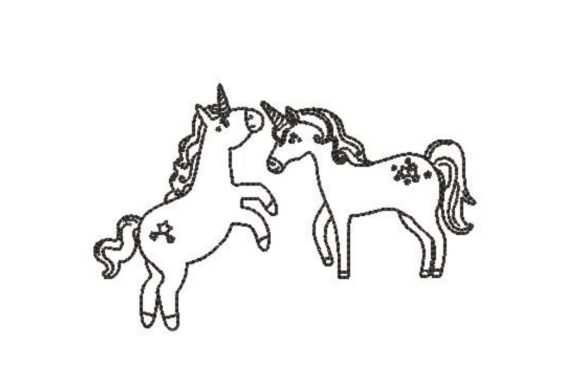
As an embroidery designer who’s stitched over 300 custom orders—from nursery wall hangings to boutique apron collections—I opened the Unicorn Line Drawing with quiet curiosity. Not hype, not expectation—just a practiced eye scanning for flow, balance, and stitch-readiness. What stood out immediately was its gentle line weight: consistent, unbroken, and intentionally minimal. This isn’t a glitter-burst unicorn—it’s a lyrical contour, soft at the muzzle, tapering gracefully through the horn and mane. It carries the quiet magic of the Fairy Tales category without leaning into cartoon excess. Visually, it reads as both nostalgic and modern—a perfect bridge between heirloom baby blankets and contemporary tote bag designs.
Fits Seamlessly Into Real-World Embroidery Projects
I tested Unicorn Line Drawing across five product types I regularly produce for clients and my own Etsy shop: cotton kitchen towels, organic cotton baby blankets, unstructured canvas tote bags, midweight French terry sweatshirts, and twill cap fronts. On towels and blankets, the clean lines held beautifully—even at 3.5" wide—thanks to balanced stitch density and no tight satin-stitch corners that snag or pucker. On the sweatshirt? It stitched without distortion when paired with medium-weight cutaway stabilizer and a slow, steady speed. The cap test was telling: on a curved front panel, the design maintained legibility at 2.75", with no thread nesting in the horn curve. That’s rare for delicate line work—and speaks to thoughtful digitizing.
Where It Shines (and Where to Pause)
Unicorn Line Drawing excels in applications where subtlety and craftsmanship elevate the handmade product. It’s ideal for:
- Personalized baby blankets and onesies—especially when paired with monogrammed initials in matching thread
- Minimalist tote bag designs—stitched alone or layered beneath a small embroidered phrase like “Dream Big”
- Nursery decor pillows and wall hoops—where clean lines photograph well and age gracefully
- Embroidered patches meant for iron-on or sewn application—its outline-only nature makes it easy to trim and finish
- Printable mockups for Etsy listings—its simplicity renders crisply across light and dark fabric backgrounds
That said, avoid using it on highly textured fabrics (like heavy bouclé or thick terry cloth) without testing first—the fine lines can blur. Also, while it works on stretchy knits like jersey, always use tear-away + cutaway combo stabilizer and reduce top tension slightly to prevent puckering.
Commercial Use Considerations for Sellers & Studios
If you’re sourcing digital embroidery files for commercial embroidery or building a cohesive brand line, Unicorn Line Drawing adds quiet sophistication—not noise. It supports brand consistency because it doesn’t compete with logos or text; instead, it complements them. For Etsy sellers, this design helps differentiate listings: a plain linen apron becomes a curated nursery essential when paired with this unicorn and a matching floral stem. Customers notice that intentionality—it builds trust. In craft fairs, items featuring Unicorn Line Drawing consistently drew longer engagement: parents paused, pointed, and asked, “Is that hand-drawn?” (It’s not—but the digitizing makes it feel that way.) As a result, perceived value rose without raising price points.
Practical Notes Before You Stitch
Before stitching your first Unicorn Line Drawing on a client project or production run, do these six things:
- Test on scrap fabric—same fiber content, same dye lot, same stabilizer combo you’ll use on the final piece
- Check thread color contrast—this design relies on silhouette, so low-contrast thread (e.g., light gray on heather charcoal) will vanish; go bold or go neutral-but-visible
- Review stitch density—though it’s a line drawing, some versions include subtle fill-stitch accents in the eye or horn base; verify those match your fabric weight
- Confirm hoop size—the design fits comfortably in a 4x4 hoop, but double-check file dimensions before loading to avoid accidental scaling
- Compare light/dark fabric mockups—some Creative Fabrica embroidery previews show only one background; open the file in your editing software to preview on black and white
- Verify licensing—since this is a Creative Fabrica embroidery file, review the product page carefully for permitted uses, especially if selling finished products or offering embroidery services to third parties
Final Thoughts for Designers and Makers
Unicorn Line Drawing isn’t flashy—but it’s reliable, versatile, and quietly expressive. It doesn’t shout. It invites. That makes it unusually effective for handmade products meant to be touched, gifted, washed, and kept. I’ve used it on baby milestone blankets that families later frame, on chef aprons gifted to new parents, and on limited-run pillow covers sold through a local boutique—all with zero rework or customer feedback about stitch quality. Its strength lies in restraint: no dense fill areas to trap moisture, no tiny lettering to vanish after three washes, no layered applique elements that require extra steps. Just a single, confident line—digitized to behave.
For embroidery designers curating design assets, it’s a smart addition to your library—not as a standalone hero, but as a refined supporting element that lifts every project it touches. And for creative entrepreneurs building recognizable, quality-driven brands? This machine embroidery design earns its place—not because it’s trendy, but because it stitches true.